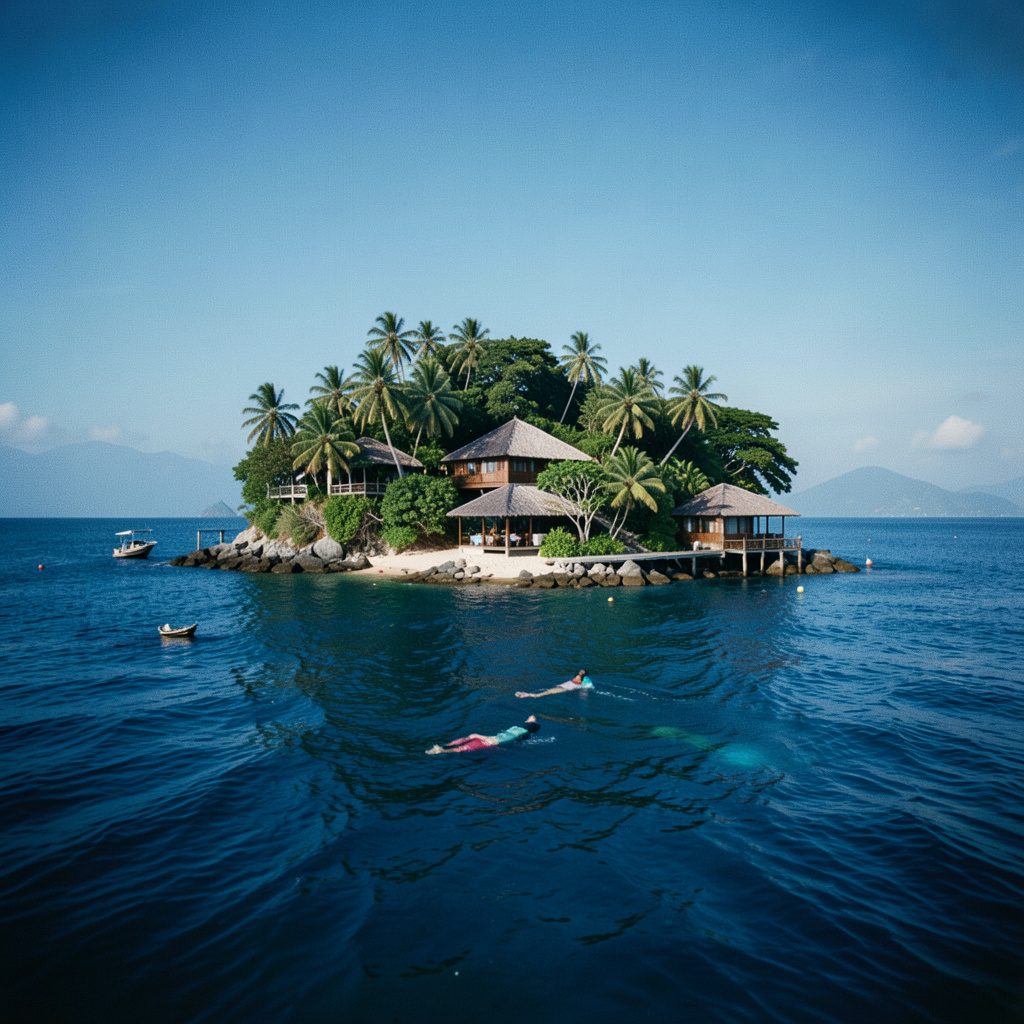


Eating well on Koh Tao for under 150 Baht
Koh Tao’s best budget eateries for under 150 Baht are usually local noodle shops, market stalls and family-run kitchens rather than restaurants built around beachfront dining. A budget plate might be pad Thai, grilled chicken with rice, a roti omelette or a bowl of soup for 60–100 Baht, leaving space for a drink or dessert.
At a rough exchange rate, 150 Baht is about A$6, although the Australian dollar moves against the baht. Check the current rate before travel. Australian menus normally include tax within the displayed price, while Thai menus may not show a separate tax line, so A$5–A$7 is a sensible planning range for one main meal.
Prices and crowds also change through the day. Breakfast stalls open early, lunch becomes busy around noon, and dinner specials appear later. A 150-Baht ceiling is easiest to keep by ordering one substantial dish, adding a low-cost drink and skipping costly extras such as large seafood portions or alcohol.
Reading the 150-baht budget
Treat 150 Baht as a ceiling for the whole meal, not simply the advertised entrée price. Some tourist menus advertise inexpensive noodles while seafood, service and drinks raise the final bill. Ask for the price of a complete serving before ordering, especially when food is priced by weight.
A rice plate, local noodles or a market snack offers the strongest chance of staying below the limit. A beachfront dinner may fit the food budget but not the full bill if it includes a cocktail, seafood platter and service charge. Choosing a local kitchen can save more than trying to negotiate individual dishes.
Street stalls and market kitchens
Mae Haad’s market area is a practical place to compare cooked-food stalls, especially around lunch when prices are easier to verify. Look for omelettes, rice boxes, skewers and stir-fried noodles, then check the posted price before adding a drink. Convenience stores can supply water, soft drinks and Thai tea without requiring a restaurant meal.
A broader Koh Tao food guide helps connect these stalls with other neighbourhoods and meal styles around the island. Small kitchens often specialise instead of serving a long menu, so a place with only a few dishes can still provide better value than a larger beach venue.
The setup resembles the Asian supermarket food courts many Sydney and Melbourne customers know, but portions and prices follow Thai local-market conventions rather than Australian café pricing. Busy stalls sell quickly, so order simply and carry exact change rather than assuming every topping or spice level is included.
Noodles and rice dishes
Pad Thai is the dependable benchmark: a standard portion commonly falls around 80–120 Baht, while extra egg or vegetables may cost little more. Prawns or squid can add 20–40 Baht and break the budget once a drink is included. Ask for the seafood price or skip it and add lime, chilli and bean sprouts instead.
Rice dishes such as khao man gai, khao kha moo or a simple stir-fried plate often cost less, while noodle soup is usually around 60–100 Baht. A dish shown in photographs may still be a single or shared serving, so confirm the portion before ordering.
For a fuller meal, combine one main dish with a 30–50-Baht Thai tea or bottled drink. Splitting a large serving with a companion can produce the lowest cost per person, provided expensive drinks are left off the order.
Grilled seafood without guesswork
Seafood is the biggest budget trap because “150 Baht” may describe one small item rather than a complete meal. At stalls and casual restaurants, ask for the price per 100 grams or per portion before selecting fish, prawns or squid. A modest serving may fit the limit, but a mixed platter can cost several times as much.
A simple fried or grilled fish with rice is often better value than a mixed seafood plate. English-style fish-and-chip shops also suit travellers seeking a familiar meal. Sauce and takeaway packaging are normally modest extras, while imported seafood and large salad sides are where prices rise fastest.
Coffee, tea and early breakfasts
Local Thai coffee, orange juice and sweetened milk tea usually cost roughly 30–50 Baht, making them useful additions to a main meal. A Western breakfast of toast, eggs or a simple omelette generally remains below 100 Baht. Fresh fruit, a roti pancake or a small Thai dessert can add only 20–70 Baht.
Australians order a “takeaway” without ambiguity, while “flat white” is a familiar request, although a café coffee costing A$4–A$6 has little relation to local prices in baht. Choosing tea, local coffee or bottled water preserves more of the food budget for lunch and dinner.
Comparing everyday meal prices
Use these ranges as a planning guide rather than guaranteed menu prices. The strongest budget choice is the meal that leaves enough money for a drink without an unlisted seafood charge.
| Option | Typical order | Typical spend | Budget value |
|---|---|---|---|
| Market cooked-food stall | Roti omelette, rice box or skewers | 30–70 Baht | Usually leaves room for a drink |
| Local noodle shop | Pad Thai or stir-fried noodles | 70–120 Baht | Reliable one-dish meal |
| Noodle soup shop | Pork, beef or fish noodles | 60–100 Baht | Filling and less dependent on extras |
| Small restaurant | Simple rice or noodle lunch | 90–140 Baht | Check whether the serving is shared |
| Tea or coffee stop | Thai tea, coffee or bottled drink | 30–50 Baht | Best as an addition to a meal |
| Fried or grilled fish | Small fish portion with rice | 120–150 Baht | Confirm the weight price first |
| Fruit or dessert | Seasonal fruit or Thai sweet | 20–70 Baht | Cheap finishing option |
Stall prices can rise with demand, and restaurant portions vary. Comparing the final food-and-drink cost is more useful than choosing the smallest number on a menu. If a dish costs 140 Baht, a 40-Baht drink pushes the meal over budget even though the entrée fits.
Paying and ordering with confidence
Carry small baht notes because market stalls may prefer cash, although many casual restaurants accept cards or phone QR payments. Check the amount on the terminal before approving it. Tipping is not normally expected for an ordinary Thai meal, unlike an optional tip on an Australian restaurant bill; paying the stated total is perfectly normal.
Useful phrases include “ching jai” for the bill and “mai phet” for not spicy. Point to a dish when the menu has pictures, and tell staff immediately about allergies or seafood restrictions. Busy kitchens may share fryers and preparation surfaces, so ask about cross-contact when the risk is serious.
Breakfast is easiest to keep low, lunch offers the widest choice, and dinner works best when you visit a stall before peak prices. Leave some baht for taxis, dive gear or an unplanned snack rather than spending the full limit on every sitting.