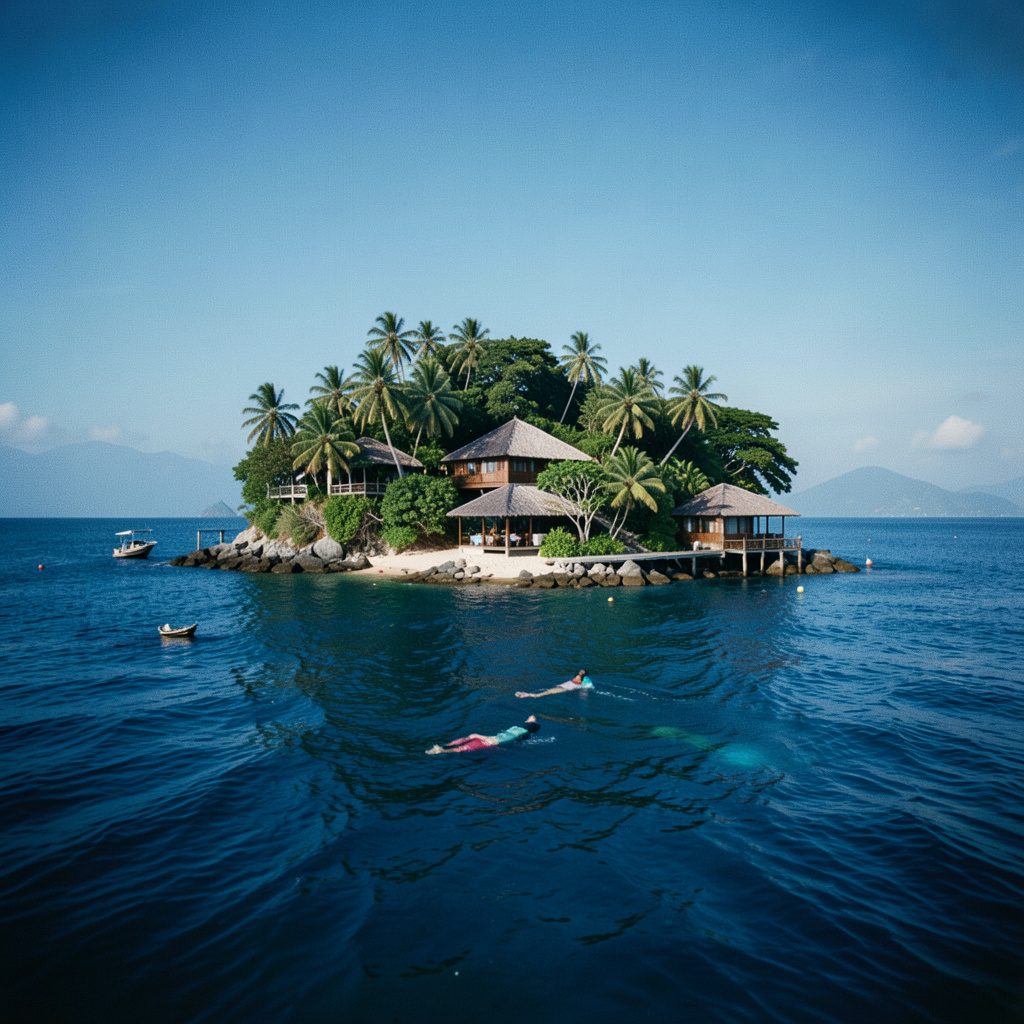


Ko Tao’s turtles, traditions and transformation
Koh Tao’s story is a meeting of tides, trade and migration. The island lies in the Gulf of Thailand, offshore from Surat Thani, and its past was shaped more by fishing and rainforest than by royal monuments or grand temples. Turtles have long been central to its identity, while the arrival of scuba divers in the late twentieth century transformed the economy.
Tourism brought new buildings, festivals, work and environmental pressure, but it did not erase local life. A visit today reveals Buddhist practice, Chinese and Malay influences, Thai food and an expanding international community. Understanding how those layers formed helps travellers see Koh Tao as a working island rather than simply a collection of beaches and dive sites.
Turtle island roots and early settlements
Koh Tao is commonly translated as “Turtle Island” or “Tortoise Island,” a name associated with the green turtles that once flourished in nearby waters and nested on its beaches. The dive site Ha Taek Ngam, often translated as “Grand Turtle Rock,” preserves that association. Although tourism now dominates the island’s image, its older name points to an environment where marine life came before arrivals.
Before the tourism boom, permanent communities were small. Families connected to fishing and small-scale tin mining moved between the mainland and neighbouring islands. Some families trace their ancestry to Chinese-Malay communities around Phuket and the Malay Peninsula, bringing customs that blended with southern Thai religious life. Buddhist temples, Chinese shrines and fishing households gradually became interwoven parts of island society.
Many traditions survived through food, work and family memory rather than written records. Chinese-style dishes, southern Thai curries and a preference for seafood reflect the island’s cultural blending. Older residents’ stories also keep alive a past in which the sea provided both a livelihood and a measure of independence.
Life shaped by sea and rainforest
Koh Tao’s steep, forest-covered interior still shapes daily life. Trails link small beaches, drainage channels feed seasonal streams, and rainfall replenishes freshwater for much of the year. Heavy downpours can make paths slippery, while boats become less reliable during rough seas. Modern resorts also bring pressure to freshwater resources and waste systems.
Marine attractions sit close to shore, making snorkelling and diving accessible without long transfers. Mae Haem and Hat Sai offer sheltered bays, while rocky reefs and seagrass beds provide different underwater experiences. Seasonal currents matter: a site that is calm in one month may produce stronger drift later, so local knowledge remains valuable.
For visitors from Sydney and Melbourne, the contrast is immediate. Australian travellers often value informality, yet a simple wai and “sawasdee” are usually more fitting than an overly casual greeting. Local guides and hotel staff may switch between Thai and English, and a respectful “no worries” still works when practical problems need solving.
A changing economy beneath the waves
Diving tourism expanded rapidly through the 1980s and 1990s, building on Koh Tao’s established reputation as a scenic diving destination. Backpackers who once came for inexpensive diving began requesting certified courses, equipment rental and multi-day trips. Dive schools, instructors and support businesses soon became central to the island’s employment.
The modern economy is broader than any single activity. Boats, accommodation, restaurants, dive equipment, laundry, transport and conservation work all depend on seasonal visitors. Reef protection and turtle programmes also demonstrate how tourism income can support environmental work, although frequent boat traffic, anchors and waste remain significant concerns.
Prices are usually quoted in Thai baht, while some Australian-facing listings display Australian dollars. This reflects the Australian travel market, but the Australian currency has no legal tender status in Thailand. Exchange rates, card fees and the final conversion shown by your bank determine the real cost. Comparing the same stay in both currencies can prevent misleading assumptions.
Festivals, faith and everyday culture
Religious life remains visible in daily routines. Buddhist monks and temples anchor the calendar, Chinese shrines reflect the ancestry of several long-established families, and Muslim communities contribute another strand to the island’s history. Festivals such as Chinese New Year, the Vegetarian Festival and Loy Krathong bring residents together through shared food, offerings and processions. Songkran adds water play and temple visits, with celebrations sometimes altering transport and opening hours.
These events are not simply performances for visitors; they are family and community occasions shaped by local custom. Food carries a similar history. Menus often combine southern Thai coconut curries, grilled seafood and Chinese-influenced dishes, while market stalls serve snacks such as fish cakes and mango sticky rice. Island chefs adapted flavours to abundant catches and imported ingredients, creating a cuisine that is both regional and distinctly maritime.
Practical currents for Australian travellers
Timing a trip requires attention to the monsoon. The drier stretch from roughly November to March usually brings calmer conditions for boats, while the wet season can produce heavy rain and reduced visibility underwater. Peak Australian summer holidays are busy, so advance bookings for rooms, dive courses and boat transfers can be worthwhile.
Scuba diving requires appropriate certification, health and safety checks, and insurance covering the planned activity. Operators should explain weather cancellations, equipment standards and course limits clearly. Australian travellers should also consult Smartraveller advice before departure and save Thailand’s Tourist Police number, 1155, for urgent assistance.
Consumer protection depends on where the booking is made. If an Australian travel agency sells you a package, the Australian Consumer Law may apply; direct bookings with Koh Tao businesses generally fall under Thai law. Travellers should read cancellation terms, check refund conditions for dive courses and involve their Australian agent if a booked component fails to match its description.
Preserving heritage while welcoming visitors
Conservation is now part of Koh Tao’s identity as much as diving. Local groups monitor nesting beaches, support turtle rehabilitation and educate visitors about fragile marine habitats. Wildlife should never be touched or fed, and operators claiming harmless encounters may still cause stress to animals. Hillside villas such as Villa Nirvana also sit within a landscape where responsible tourism depends on managing water, energy and coastal access.
| Aspect | Earlier island life | Contemporary Koh Tao |
|---|---|---|
| Main livelihood | Fishing and small-scale mining | Diving, snorkelling, accommodation and food services |
| Coastal rhythm | Weather, tides and fishing grounds | Dive schedules, ferry connections and tourism seasons |
| Cultural calendar | Temple, shrine and household traditions | Living festivals combined with international visitor expectations |
| Marine life | Familiar turtles and abundant coastal wildlife | Conservation programmes and managed wildlife encounters |
| Island development | Footpaths, modest homes and limited infrastructure | Resorts, roads and pressure on water, waste and reefs |
Yet the strongest heritage is cultural, not merely ecological. Fishing families, religious spaces, food traditions and island stories continue beside contemporary resorts. Their coexistence with mass tourism explains why Koh Tao feels both established and constantly changing: its past remains active in everyday life rather than surviving only in displays or nostalgic accounts.