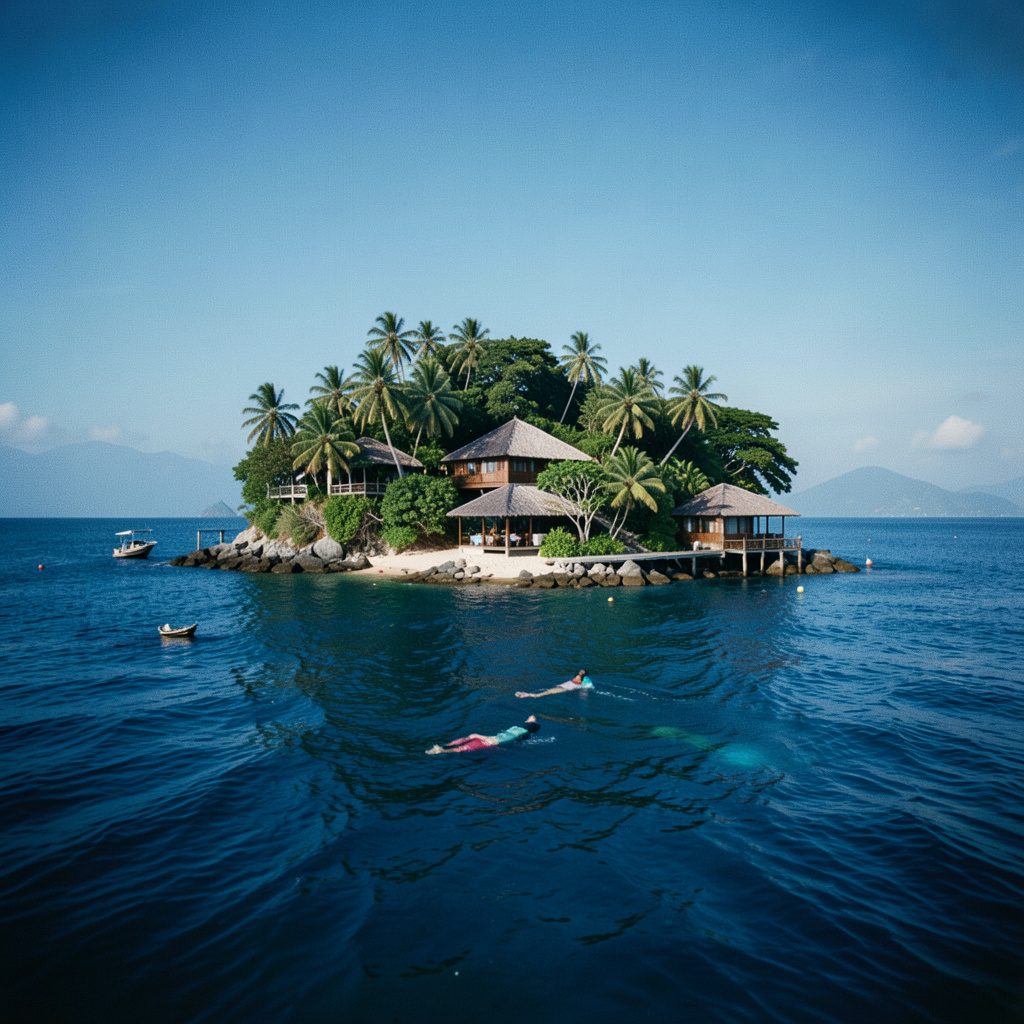


Koh Tao for backpackers: hostels and social vibe
Koh Tao rewards budget travellers with warm water, lively beach towns and accommodation that leaves more cash for diving or a scooter. Short ferry hops from Ko Pha Ngan make it an easy add-on to a Thai itinerary, while Mae Haad provides a practical base for food, ATMs, diving schools and late-night conversation.
The island’s appeal is not simply cheap beds. Many small hostels and guesthouses function as social hubs, with shared tables, rooftop decks, poolside bars and communal dinners where a solo arrival can become a diving crew or beach-day group within a day. The right room can turn an isolated stopover into a trip with familiar faces.
Low-season prices are attractive, but good-value addresses sell out quickly. Compare location, room type and guest atmosphere rather than chasing the lowest number. KohTaoIsland.net helps with bungalow resorts, guesthouses, hillside villas and dive courses, but the final choice depends on how social and nocturnal you want the stay to be.
For Aussies, Koh Tao offers a change of scale from Sydney and Melbourne hostel districts: smaller streets, fewer crowds and a slower rhythm. This guide balances price, privacy and sociability with practical realities for travellers arriving from Australia.
Budget rooms with a social pulse
Backpacker dorms are the straightforward way to cut costs, especially for short stays. A reading light, personal fan, charging socket and secure locker matter more than a fancy balcony. Choose a mixed dorm if you enjoy conversation, a female-only dorm if early nights matter, and check reviews for air-conditioning, hot water and bar noise.
A private guesthouse room gives solo travellers a quieter middle ground. It can cost less than an Australian city weekend while retaining access to a shared kitchen and terrace. Poolside bungalows add privacy and tropical space, but hillside villas can sit away from the main strip, making transport more important and spontaneous socialising less likely.
Book the first or second night, then decide whether to move. Repeat guests often switch from a dorm to a private room after making friends, or from a bungalow to a central hostel before a night out. Confirm air-conditioning, towel policy, lockers, breakfast, guest-night access and bar closing times before paying.
Hostel bars and the island social scene
Hostel social scenes usually begin in the common room. Communal dinners, quiz nights, film screenings, live music and pub-style games create conversation without requiring much spending. Look for a bar that organises small group activities rather than one built around loud music; a kitchen with long tables and a shaded deck often works better for meeting people.
For quieter travellers, the best social hostel is not always the loudest. Mae Haad and smaller settlements offer beach bars where conversation continues after dinner, while Freedom Beach attracts a more relaxed crowd at certain times. Check the events calendar, ask whether alcohol is served on the premises and find out when neighbours expect silence.
Keep nightlife expectations grounded: social evenings centre on music, inexpensive drinks and conversation, not casinos. Some travel pages attach betting promotions to destination commentary, so an offshore casino guide is not evidence that licensed gambling exists on Koh Tao; check any venue’s authorisation directly.
Shared adventures beyond the beach
Shared diving is the strongest social catalyst on the island. A three- or four-day scuba course puts beginners through exercises, boat dives and buddy checks, often creating a close-knit group. Discover Scuba Diving suits travellers without certification, while certified divers can join fun-dive boats. Snorkelling trips, kayaking and sunset cruises provide easier ways to join a group.
Coordinate the booking around your ferry or flight, not merely the cheapest course price. PADI and SSI programmes are widely available, but compare instructor ratios, equipment, certification cards and included dives. Koh Tao’s currents can be stronger than sheltered bays suggest, so a conservative instructor and thorough briefing are worth more than another free add-on.
Beach days need less organisation. Walk between Mae Haad, Sai Kwan and Freedom Beach, take a scooter to a viewpoint or reserve a morning for a cooking class. A shared day trip gives conversation its own subject, while a booked activity keeps plans predictable. Leave space in the itinerary for spontaneous stops.
Practical realities for Australian travellers
Flights from Sydney and Melbourne to Bangkok are common, with onward travel by night bus, minivan or ferry. Carry Thai baht for small market stalls and guesthouses that do not accept international cards; this differs from the tap-and-pay routine many shoppers use at Woolworths or Coles. Budgeting in Australian dollars helps, though exchange rates and high-season pricing can move quickly.
Customs differ from Australia in small but visible ways. Remove shoes before entering a temple, cover shoulders and knees, and avoid touching anyone’s head. A wai is a respectful greeting, and public affection is usually understated compared with Australian cities. Laws around alcohol, controlled substances and offending the monarchy can carry serious penalties, so check Smartraveller and local signs rather than assumptions from home.
Thailand drives on the left, as Australia does, but roads are narrower and scooters mix with pedestrians, buses and tuk-tuks in unfamiliar ways. An Australian motorcycle licence alone may not be accepted; carry the correct International Driving Permit and verify insurance. Use a helmet, keep bags close and avoid night riding after drinking. Heavy downpours during the wet season can interrupt roads, dives and ferries.
Choosing the right place to stay
A comparison should include total location cost, not only the nightly rate. A cheap room far from Mae Haad can lose its value when taxis, scooter hire and missed social evenings enter the picture. Use live prices as a starting point, then read recent reviews for cleanliness, staff, bed comfort and the balance between socialising and sleep.
The figures below are rough planning bands for July 2026 and will move with season, availability and exchange rates. They are useful for setting a budget rather than choosing a property. Confirm what is included, particularly transfers, towels, meals, dive equipment and taxes.
| Accommodation | Typical nightly budget | Best for | Social atmosphere | Main trade-off |
|---|---|---|---|---|
| Backpacker dorm | A$15–35 | Short stays and meeting people | Shared, lively and informal | Noise, limited privacy and locker rules |
| Private guesthouse room | A$30–65 | Solo comfort without losing the scene | Quieter, with access to a guesthouse bar | Higher price and fewer spontaneous plans |
| Poolside bungalow | A$50–110 | Couples and longer stays | Relaxed and resort-like | Distance from the main strip can add transport costs |
| Hillside villa | A$90–180+ | Groups or a splurge | Private and calm | Expensive, quieter and dependent on transport |
By day, the same guesthouse can be a launch point for reef trips and beach walks; by night, it can be the place where a group forms over dinner, cards or a playlist. That balance is what makes Koh Tao especially memorable for backpackers.