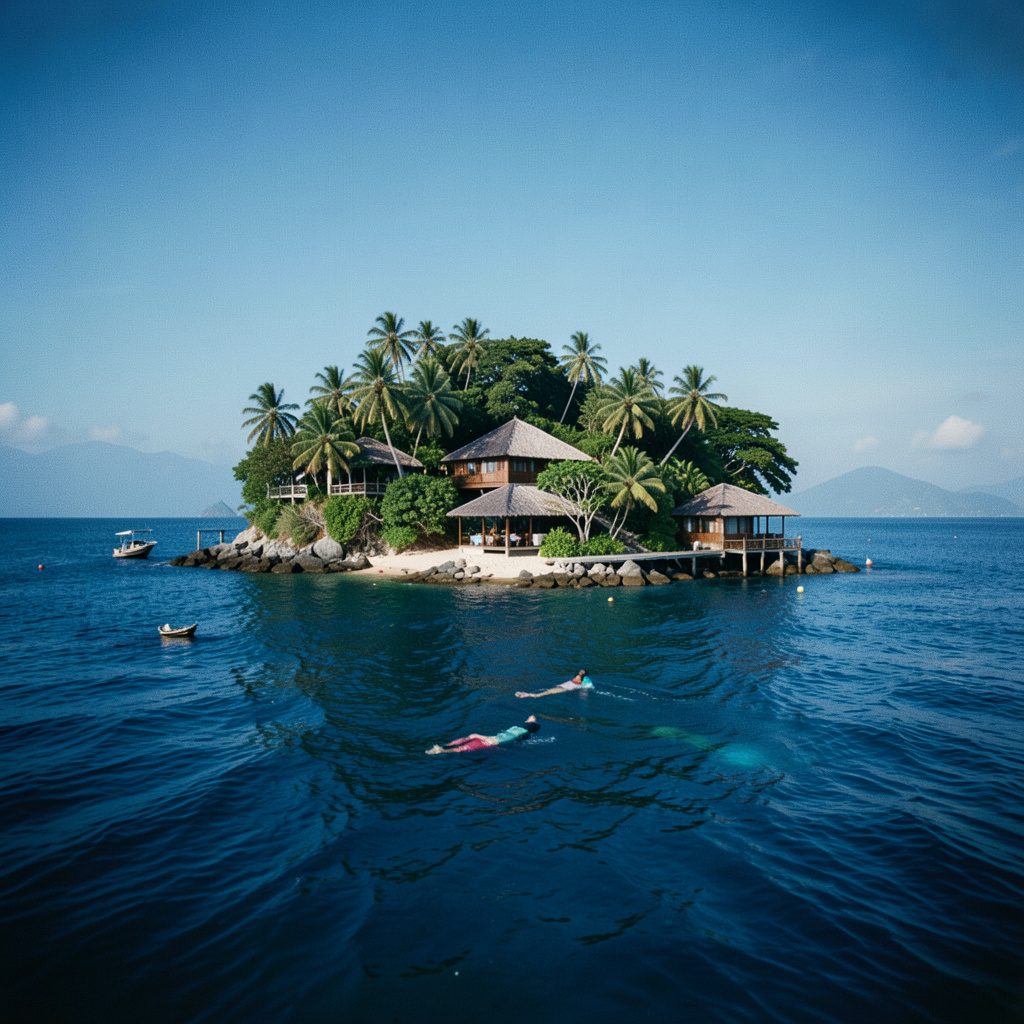


Advanced diving on Koh Tao: wreck, deep and Nitrox
Advanced diving courses on Koh Tao are a logical next step for certified open-water divers who want structured skills in deeper water, navigation and mixed breathing gas. Rather than a collection of scenic dives, these programs build repeatable habits for deciding limits, managing gas and handling changing conditions beneath the Gulf of Thailand.
Koh Tao is a compact training island with reefs, channels and accessible wrecks close to shore, but it is not an aquarium. Visibility can be good one week and reduced by plankton or sediment the next. Tidal currents around headlands and narrow passages also make local judgement as important as textbook knowledge.
Programs may lead to internationally recognised Advanced Open Water, Deep Diver, Nitrox and Wreck Diver credentials. Some operators combine modules, while others teach them separately. The right choice depends on logged experience, current certification, desired depth and whether a diver plans to enter wrecks or simply remain outside their cabins.
For Australians, the course fits neatly into a longer Thailand itinerary, although flights usually connect through Bangkok or Phuket rather than landing directly on the island. Travellers from Brisbane, Sydney, Melbourne and the Gold Coast should build time around course completion, school holidays and possible weather-related changes rather than treating every dive day as guaranteed.
Choosing the right advanced course pathway
Start with the Advanced Open Water course when a diver can already handle normal open-water dives but lacks a formal framework for deeper descents. Typical modules cover navigation, search patterns, flashlight use, environmental awareness and a controlled deep dive. Some schools add underwater photography, which is useful for identifying marine life without disturbing it.
A Deep Diver course is more focused and generally takes divers to a planned maximum of 40 metres. A Wreck Diver course introduces penetration planning, line handling and entry procedures, while a Nitrox course trains the use of enriched air at selected percentages. Combining these credentials can create a demanding day if they are not spaced sensibly.
Before enrolling, check what practical experience the school expects, how many dives are included, and whether equipment is supplied. Australian divers often hold PADI, SSI or NAUI cards, which are widely accepted, but the issuing agency remains on the record. For a longer course-and-stay trip, compare transfer arrangements at Leelavadee Resort with other accommodation, then confirm that the dive school collects guests from the property.
Wreck diving around Koh Tao
The island’s best-known wreck is the HTMS Sattakut, deliberately sunk as an artificial reef. It rewards careful observation from the exterior, with marine growth and fish gradually softening its structure. Charts and local briefings determine the accessible areas; depth and site rules should never be inferred from an old photograph or another diver’s route.
Penetration is a separate step from looking over a wreck. A recreational Wreck Diver course may cover a controlled entry and exit, but entering a cabin, following a line inside or remaining within the structure requires appropriate training, permission and supervision. Overhead exits, lost visibility and entanglement make a few metres of penetration a serious undertaking.
Koh Tao’s wrecks are usually reached by boat, so current strength, surface support and the skipper’s route affect the whole dive. Visibility can fall quickly inside a hull. Divers should preserve a clean mask, manage their fins and lights, and follow the guide’s penetration limits even when the water at the entrance appears calm.
Planning deeper dives safely
Deep diving is not simply choosing a larger number on the computer. In a 30–40 metre recreational dive, narcosis can alter judgement, air consumption may rise and the margin for error becomes smaller. The Deep Diver course teaches a direct ascent with a safety stop and the gas planning needed to return comfortably rather than at the last possible moment.
Decompression stops remain important even within recreational limits. A diver who descends too quickly, spends too long near the bottom or feels pressure to follow another buddy can accumulate a loading that cannot be ignored. Skills such as buoyancy checks, the buddy system and controlled ascent rates matter more than the prestige attached to the maximum depth.
Operators set their own limits, and many recreational programmes stop at 40 metres because greater depths need technical procedures and different training. If future goals include deeper technical dives, decompression diving or cave penetration, the advanced course should be used as preparation rather than treated as a shortcut to those disciplines.
Getting the most from Nitrox
Nitrox is enriched air containing more oxygen than the standard 21 per cent. Common training blends are 32, 34 or 36 per cent, although the exact mix must match the analysis and the plan. It can extend bottom time by reducing nitrogen uptake at a given depth, but it is not permission to stay underwater longer without calculating gas and oxygen exposure.
The course should include cylinder analysis, correct labelling, regulators suited to the gas and procedures for dealing with a wrong mix or suspected contamination. Oxygen narrows the safe margin for certain factors, including depth, exertion and repeated exposure. A blend that suits a relaxed reef dive may be unsuitable for a strenuous wreck penetration.
Nitrox pairs particularly well with deeper recreational dives, provided the diver calculates available gas at the intended depth and monitors the analyser throughout the dive. Some schools recommend taking Nitrox before a deep or wreck course, allowing divers to practise the procedures before those modules add another layer of complexity. Certification does not replace the dive plan.
Booking courses and an island stay
KohTaoIsland.net can help compare courses and accommodation, but the final booking should name the training school, certification level and exact inclusions. Ask whether fees cover classroom instruction, pool or confined-water sessions, equipment hire, certification cards and local transfers. Australian travellers paying in AUD should also check the card issuer’s foreign-exchange rate and whether deposits are refundable.
Accommodation near the departure jetty can reduce transport stress during a multi-day diving course. Compare the location of bungalows, guesthouses and hillside villas with the school’s boat schedule, and confirm the pickup point. A comfortable bed matters, but so does sleeping before an early departure.
Australians often build a Thai holiday around a flexible buffer, especially when a Koh Tao flight depends on a Bangkok or Phuket connection. Queensland and New South Wales school holidays can lift demand, so booking early provides more choice of boats and rooms. A friendly “no worries” may punctuate an Australian briefing, but depth, turnaround time and gas limits remain exact. For a wider Southeast Asian itinerary, a Vietnam-focused site such as Vietnam travel planning can help with a later Hue or Da Nang extension; Koh Tao training, equipment and certification should still be arranged with the local school. Experienced travellers commonly leave at least a full day after the final dive before an international connection and carry suitable travel and diving insurance. That buffer provides room for a delayed checkout or changed flight schedule.